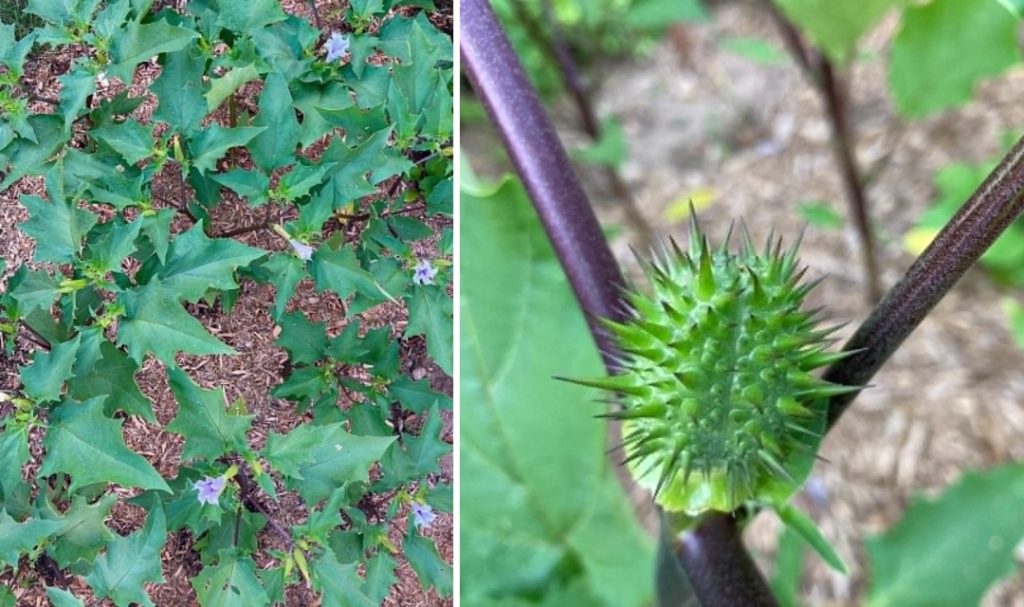
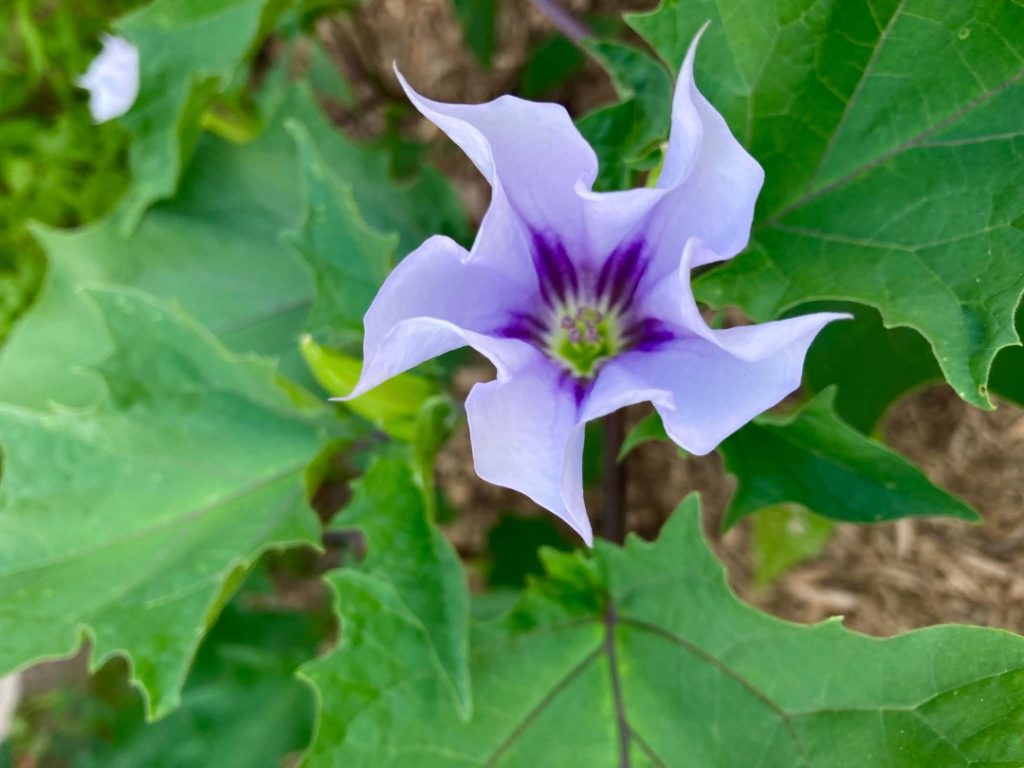
Meet thornapple, also known as jimsonweed and by its scientific name Datura stramonium, an especially toxic member of the nightshade family. This specific variety that I grow in my poison garden is datura stramonium var. lilac named for its purple stems and lilac-tinged flowers. The standard thornapple species has green stems and pure white flowers. The flowers of stramonium types are smaller than other datura species and the leaves are larger and less fuzzy than other daturas. The plant smells strongly bitter hinting at the deadly poisonous nature, but the flowers are faintly sweet to attract pollinators. It is beloved by bumblebees and different types of nocturnal hawk moths but is the least scented Datura species. The most strongly scented would be Datura inoxia, Datura wrightii, and Datura metel.
All Datura species are incredibly poisonous and should be handled with great care and respect to avoid anticholinergic poisoning which can make you end up in the emergency room. Gardening gloves with rubber palms should be warn when planting, transplanting, or pruning as the toxins can affect you just from touching the plants. Datura species are hallucinogenic but not in the fun way, they are classified as deliriants with side effects of organ damage, brain damage, memory loss, and an earlier risk of dementia if ingested. Poisoning symptoms from touching datura are thankfully only temporary.
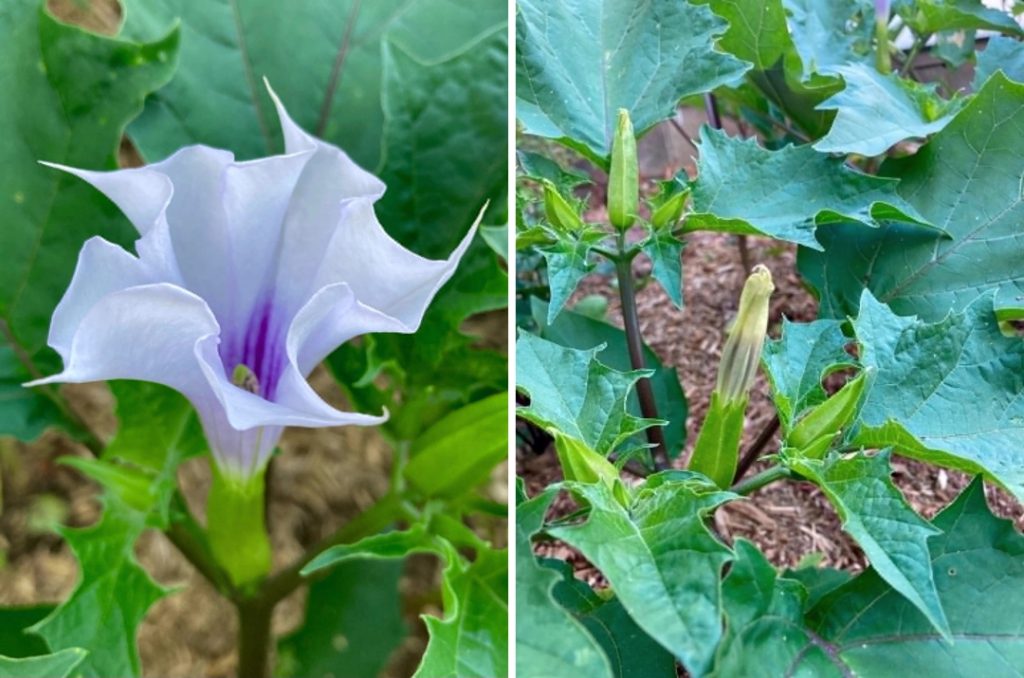
It’s important to note thornapple is the wildest and weediest datura species and it is banned in many regions as a noxious weed that is considered a danger to food crops and livestock due to it’s deadly toxic nature. The seeds are restricted from shipping between Canada and the US or between Canadian provinces and also between some US states, but if you can source the seeds locally for personal use in your garden it’s usually fine. I sourced my seeds from a local farmer who wanted to remove the plants from a pig pen. It’s best to check you local laws and by-laws before growing Datura stramonium.
If you decide to grow it outside of its native range, the best way to keep thornapple from spreading and becoming invasive is to collect all the seed pods before they mature as they are built to split open like slow-mow bombs and explode seeds everywhere. To re-seed in cold climates, keep one mature seedpod and plant the seeds where you specifically want the plants to grow. Mature and viable Datura stramonium seeds are black in colour.