
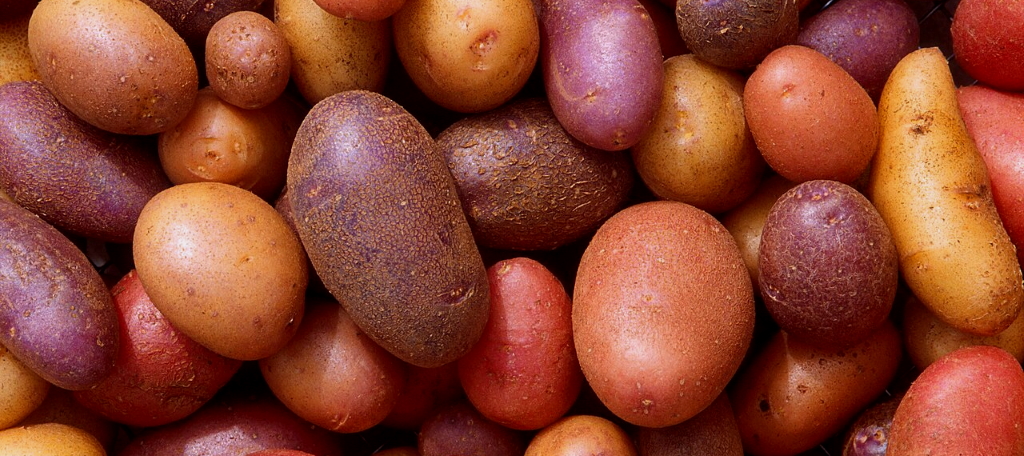
My favourite member of the nightshade family is the humble potato, no contest. The potato (solanum tuberosum), originating from high altitudes in the Andes of South America, is closely related to the toxic nightshades I’m always talking about like belladonna, datura, henbane, mandrake, and black and bittersweet nightshades. Lots of food plants are nightshades such as tomatoes, peppers, eggplant, and ground cherries.
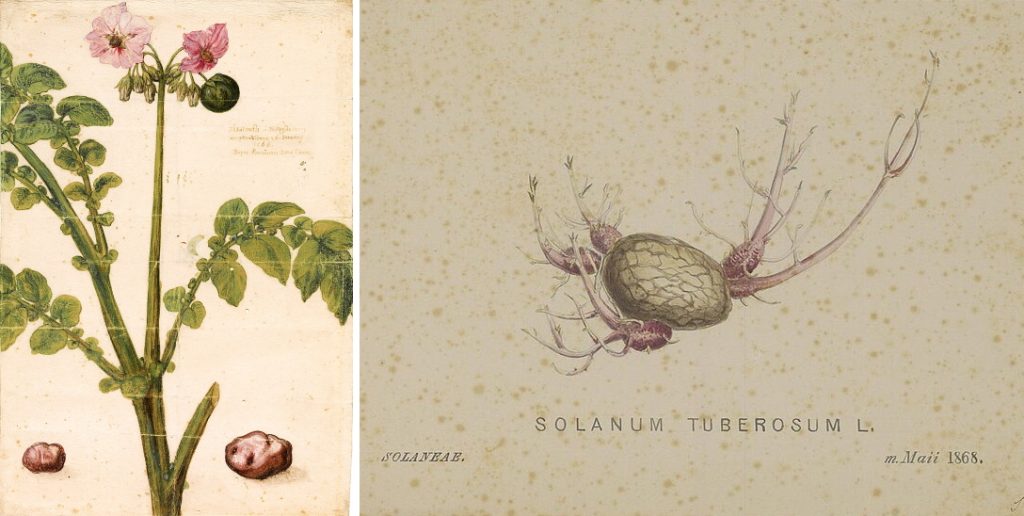
Potato plants contain the toxic alkaloid solanine in the stems, leaves, and fruit and also in potato tubers that have turned green due to being exposed to light. Solanine is a saponin and ingestion can result in poisoning symptoms of stomach pain, nausea, vomiting, diarrhea, headache, dizziness, joint inflammation and pain, skin itchiness, rashes, and in severe cases –fever, dialated pupils, paralysis, jaundice, hypothermia, paralysis, and death.
Storing potatoes in the dark prevents solanine synthesis, but long-term storage can still result in increasing levels. Cooking, boiling, deep frying, freezing, and drying do not destroy solanine. Nightshade alkaloids are notoriously heat resistant. However, most of the solanine is found in potato skin so peeling potatoes before cooking does work.
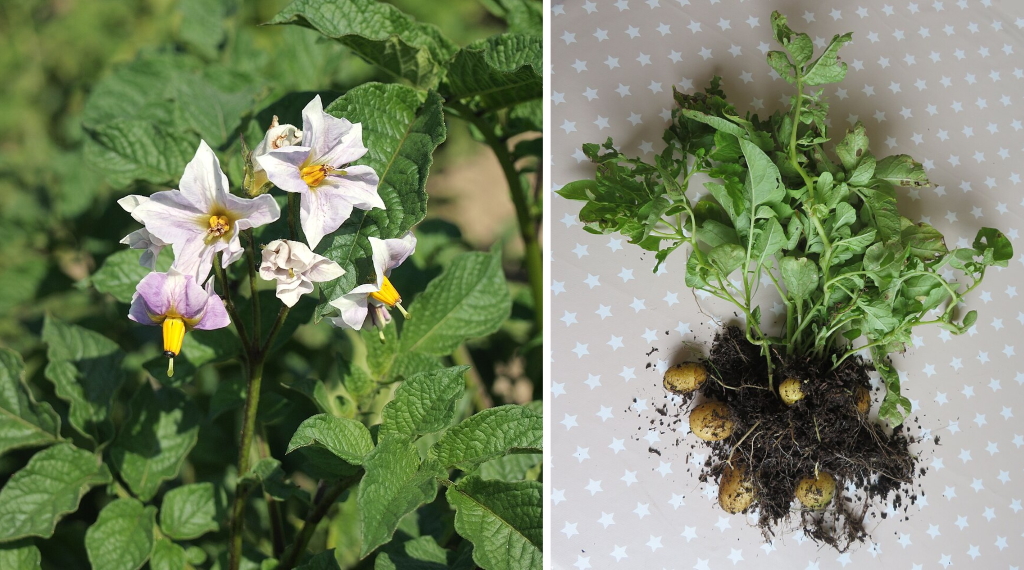
As someone who stores 50-100 pounds of potatoes in my cold cellar every winter, I start off eating them with the peel on (as the peel is the most nutrient dense) and as winter goes on, and the potaoes are less fresh, I start peeling them before cooking.
Potatoes are 78% water, 18% carbohydrates (mostly starch), 2% protein, 0.1% fat, with enough daily vitamin C to avoid scurvy. Today the potato is one of the most important vegetables in the world and yields more calories per acre than other crops.
All hail the potato!